Where a person keeps their money is one of the most consequential financial decisions most people make without realizing it is a decision at all. Every deposit placed with a bank becomes a source of lending capital. That capital flows back out as mortgages, small business loans, and lines of credit. The question of who receives those loans, and in which neighborhoods, is largely determined by which institution holds the deposits.
The Federal Deposit Insurance Corporation (FDIC), the federal agency that insures bank deposits and supervises financial institutions, found that Black-led minority depository institutions originated 65 percent of their mortgages to borrowers in low-to-moderate income census tracts in 2016, a rate more than four times that of conventional community banks. Research from the Federal Reserve Bank of Chicago confirmed a parallel pattern in small business lending: minority depository institutions directed 38 percent of their small business loans to borrowers in low-to-moderate income neighborhoods, compared with 21 percent for non-minority institutions.
The five institutions below have built documented records of directing depositor capital into historically underserved communities. Each operates as a federally insured depository institution. Each has been designated by the U.S. Treasury Department as a Community Development Financial Institution, a certification requiring that a majority of lending activity reach low-to-moderate income borrowers and communities.
OneUnited Bank
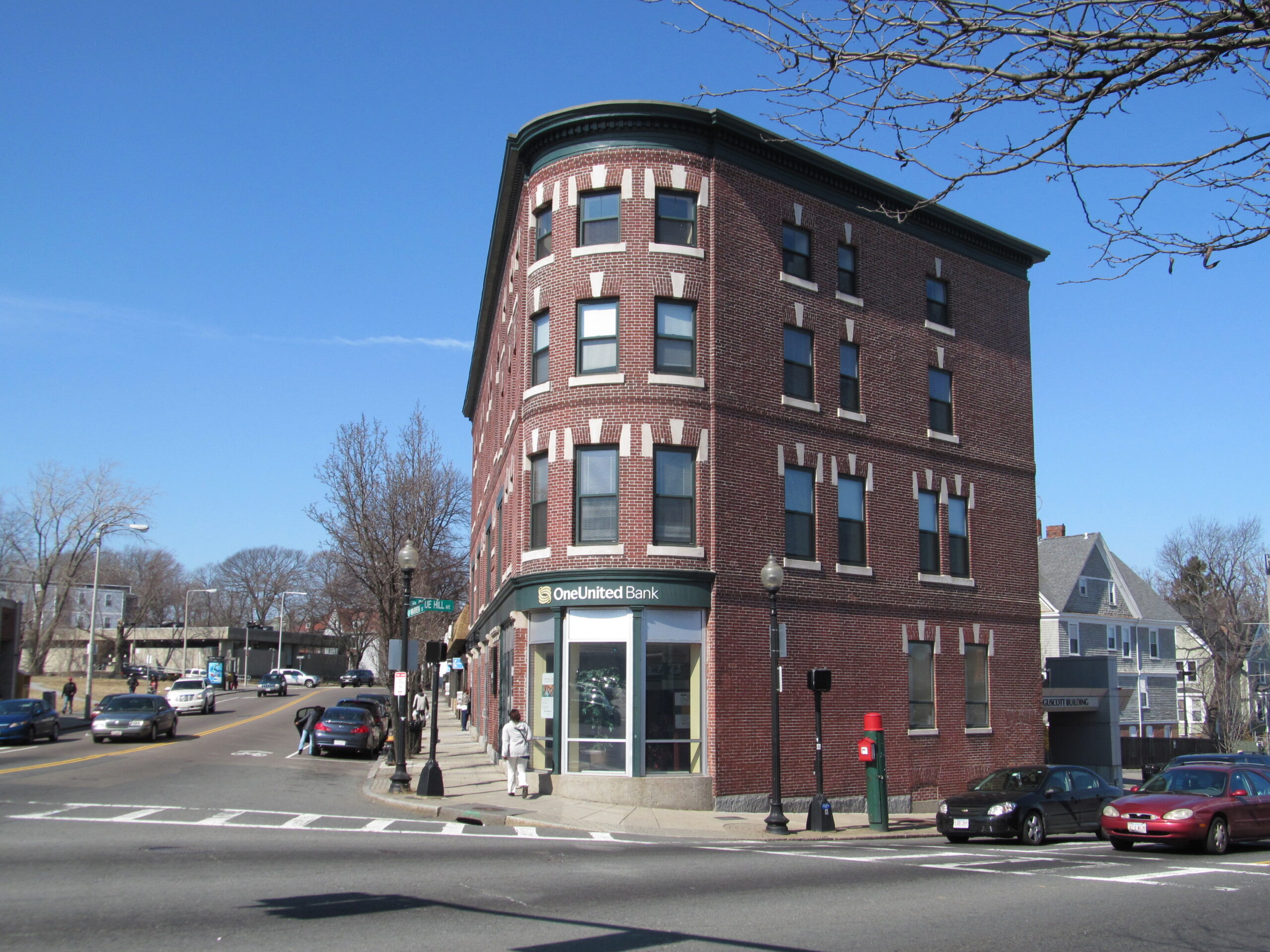
OneUnited Bank, headquartered in Boston with branches in Los Angeles and Miami, is the largest Black-owned bank in the United States by assets. The institution traces its origins to the Civil Rights era through its predecessor, Boston Bank of Commerce, which was established to serve Nubian Square, one of Boston’s historically Black neighborhoods. OneUnited has been awarded the U.S. Department of Treasury’s highest Bank Enterprise Award more than ten times for community development lending and has financed close to $1 billion in loans, the majority in low-to-moderate income communities including South Central Los Angeles, Compton, Liberty City in Miami, and Roxbury in Boston.
The bank was also the first Black-owned institution in the country to offer full internet banking, a structural decision that expanded access beyond its physical branch footprint.
Carver Federal Savings Bank
Carver Federal Savings Bank was founded in Harlem in 1948 to serve African American residents and business owners who were systematically excluded from mainstream lending at the time. The institution, named for scientist George Washington Carver, has operated continuously in upper Manhattan, Brooklyn, and Queens for more than seven decades.
Carver has been certified by the U.S. Treasury as a Community Development Financial Institution and holds over $756 million in assets. The bank has stated publicly that approximately 80 cents of every dollar deposited is reinvested in the communities it serves, with a lending portfolio concentrated in New York City’s five boroughs. Carver’s loan activity has historically supported community organizations, small businesses, and affordable housing development across neighborhoods that remain underserved by larger national institutions.
Liberty Bank and Trust
Liberty Bank and Trust, founded in New Orleans in 1972, is one of the largest Black-owned banks in the South and among the most active community development lenders in the country. The institution holds U.S. Treasury certification as a Community Development Financial Institution and has received the Treasury’s Bank Enterprise Award for community development lending consistently over its history. Liberty operates branches across multiple states, with a service model built around affordable housing finance, small business lending, and deposit products designed for low-to-moderate income customers.
The Urban Institute, a nonpartisan economic and social policy research organization, has identified Black-owned banks like Liberty as critical infrastructure for expanding mortgage access in communities where conventional lenders have historically underperformed or withdrawn entirely.
City First Broadway Bank
City First Broadway Bank was formed through the 2021 merger of City First Bank of Washington, D.C., and Broadway Federal Bank of Los Angeles, creating the largest Black-led minority depository institution in the country at the time of its formation. The combined institution holds a CDFI designation and focuses heavily on community real estate lending, including affordable housing, charter schools, community facilities, and faith-based organizations.
Broadway Federal Bank’s predecessor operations in Los Angeles were built around multifamily housing lending for low-to-moderate income borrowers, a mission City First continued in the District of Columbia. The merger created an institution with geographic reach across two of the country’s most economically stratified metropolitan areas, with a lending model explicitly oriented toward community development over commercial return.
Industrial Bank
Industrial Bank, founded in Washington, D.C. in 1934, is one of the oldest continuously operating Black-owned banks in the United States. The institution was established during the era of legal segregation to provide financial services to residents of Washington’s historically Black neighborhoods when access to conventional banking was legally and structurally restricted.
Industrial Bank today holds branches in the Washington metropolitan area and has maintained its community development lending focus across its nine-decade operating history. The Federal Reserve’s annual report to Congress on minority depository institutions recognizes institutions like Industrial Bank as essential to preserving financial access in communities that remain underserved by national banking chains, particularly for first-time homebuyers and small business owners who fall outside conventional underwriting criteria.
The Decision Behind the Deposit
The Federal Reserve Board of Governors reports that the total combined assets of all Black-led minority depository institutions in the United States stand at approximately $7 billion. That figure represents less than one percent of U.S. bank assets, a disparity that limits the scale at which these institutions can lend. The Urban Institute has noted that increasing capital flows to Black-owned banks, through deposits, investment, and public policy support, is among the most direct mechanisms available for expanding mortgage and small business credit access in underserved communities.
A checking account or savings deposit at any of the five institutions above represents a concrete and individual-level participation in that capital flow. The institutions are federally insured to the same FDIC limits that apply at any national bank. The difference is in where the lending goes next.
Sources: Federal Deposit Insurance Corporation, Federal Reserve Bank of Chicago, Federal Reserve Board of Governors, U.S. Department of the Treasury, Urban Institute