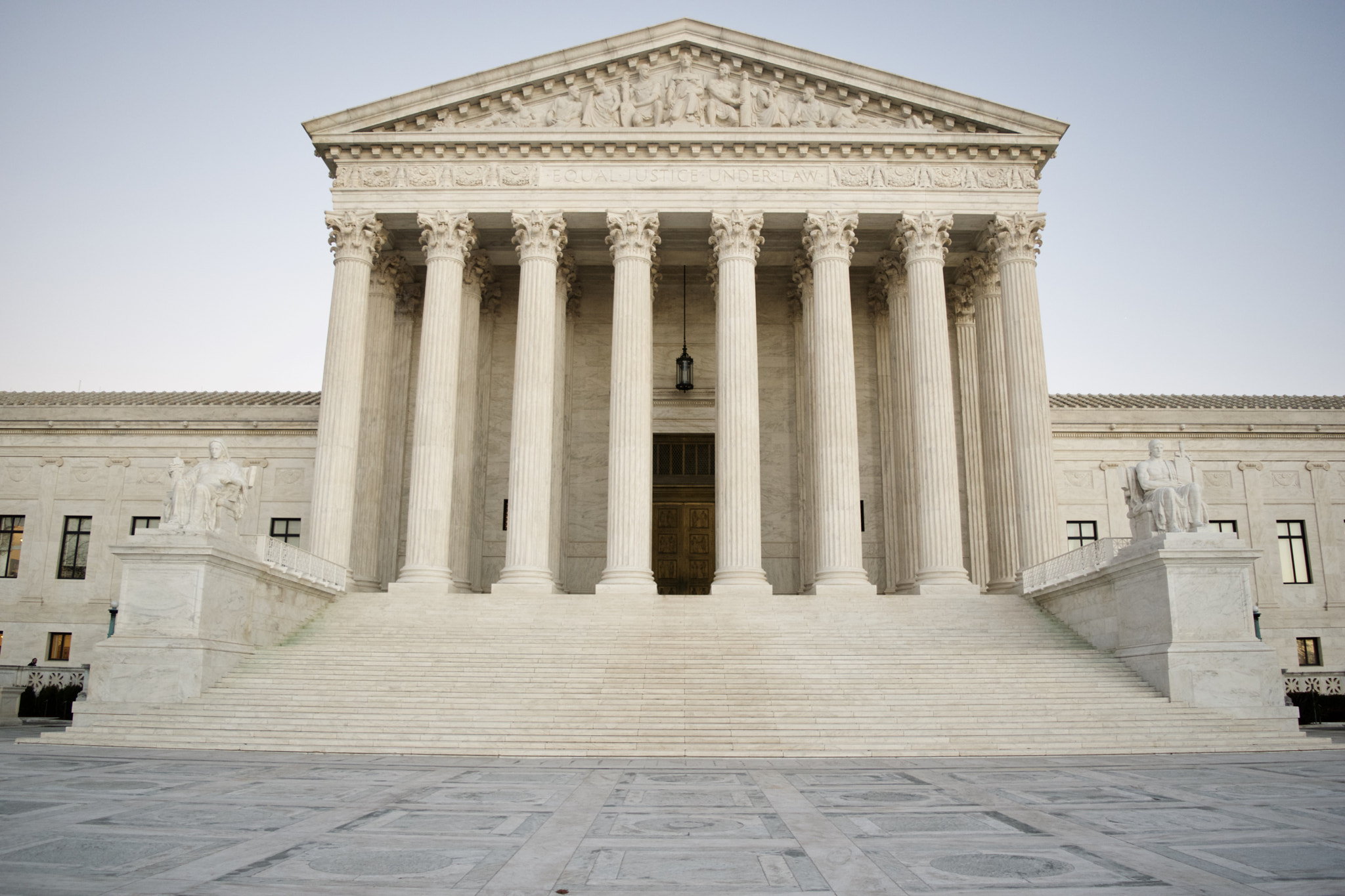
On Wednesday, The Supreme Court voted 6-3 to strike down Louisiana’s voting map in Louisiana v. Callais. The ruling did not erase Section 2 of the Voting Rights Act, but it made Section 2 much harder to use going forward.
Section 2 stops states from drawing maps that weaken Black voters’ power. Under the old standard, a plaintiff had to show that a map caused harm. The new standard requires proof that the state meant to cause harm. That is a much steeper test. Justice Elena Kagan wrote for the three dissenters that the ruling had made the core of the Voting Rights Act all but a dead letter.
Six states have already drawn new maps for the 2026 midterm cycle. Florida’s state legislature is in a special session right now. The governor’s proposed map would shift Florida’s seats in Congress from 20 for Republicans and 8 for Democrats to 24 and 4. Alabama, Georgia, Mississippi, and Texas are each in line to draw new maps for 2028. They now face fewer legal limits than at any point since 1965.
What Section 2 Was Designed to Do
When Black voters gained real power at the polls, wages in their areas went up. Years of research back that up.
Researchers at UC Berkeley and Indiana University studied how the Voting Rights Act changed outcomes in Southern counties from 1950 to 1980. In counties where the law was more tightly enforced, the pay gap between Black and white workers shrank faster. The main reason was access to public jobs. Black workers got hired for posts that white leaders had long kept almost entirely for white residents, according to the Washington Center for Equitable Growth.
In 1950, Black workers in the South earned 55 cents for every dollar a white worker made. By 1980, that had risen to just over 80 cents. The Voting Rights Act drove about one-fifth of that gain. Most of that progress came in the five years right after the law passed.
How Political Power Shapes Family Finances
Power at the polls shapes family finances through a clear path: public money. When Black voters could elect the leaders they chose, those leaders steered more funding into the areas that voted for them.
Researchers at Dartmouth and Yale studied Southern counties over the 20 years after the Voting Rights Act passed. Counties with more Black residents got more state money for schools, roads, and services. Better-funded schools led to stronger job outcomes for Black children. Research in the Journal of Political Economy found the same pattern at the county level. When Black candidates won seats on county boards that set local budgets, public spending in those counties grew faster.
According to the Economic Policy Institute, the typical white family today holds about eight times the wealth of the typical Black family. That gap traces back to choices made over many decades. Which areas got roads. Which schools got money. Which workers got public jobs. The Voting Rights Act was one of the few federal tools that linked voting power directly to those choices.
Which States Move Next
Louisiana is likely to feels the ruling’s impact first. Black residents make up one-third of the state’s people. Courts had already found the 2022 map likely broke the law. Under that map, Black voters had a real shot at choosing their preferred candidate in just one of the state’s six seats in Congress. The 2024 map, now struck down, had added a second.
Alabama, Georgia, Mississippi, and Texas are next. Issue One, a nonpartisan elections group, found that weakening Section 2 could wipe out 15 or more seats where minority voters held real power. Georgia alone could lose two. Mississippi and Alabama both have one-party control of their state houses. Both also have long records of racial vote dilution. Either state could begin drawing new maps within weeks.
The ruling reaches past Congress. It covers every kind of voting map in the country: state houses, school boards, city councils, local utility boards. Those bodies set school budgets, decide how road money gets spent, and control who fills public jobs. That is where the real financial stakes are for most families.
How to Track What Happens Next
The Justice Department’s Civil Rights Division can still look into voting bias. Cases now require proof that a state meant to discriminate, which is harder to show. The Brennan Center for Justice, a law and policy group, tracks active legal cases which residents can use to follow map fights in their own states.
A few states have their own voting rights laws that work apart from Section 2. California and New York are two. In states without that kind of cover, Wednesday’s ruling took away one of the last tools left to fight maps that cut the power of minority voters.
Sources: Supreme Court of the United States, Louisiana v. Callais, No. 24-109 (April 29, 2026); Washington Center for Equitable Growth, Aneja and Avenancio-León, UC Berkeley and Indiana University; Economic Policy Institute, “Chasing the Dream of Equity” (2023); Journal of Political Economy, “Race, Representation, and Local Governments in the US South,” Vol. 131, No. 4; Issue One, “How Louisiana v. Callais Could Impact Pre-Midterm Redistricting” (2026); Brennan Center for Justice