
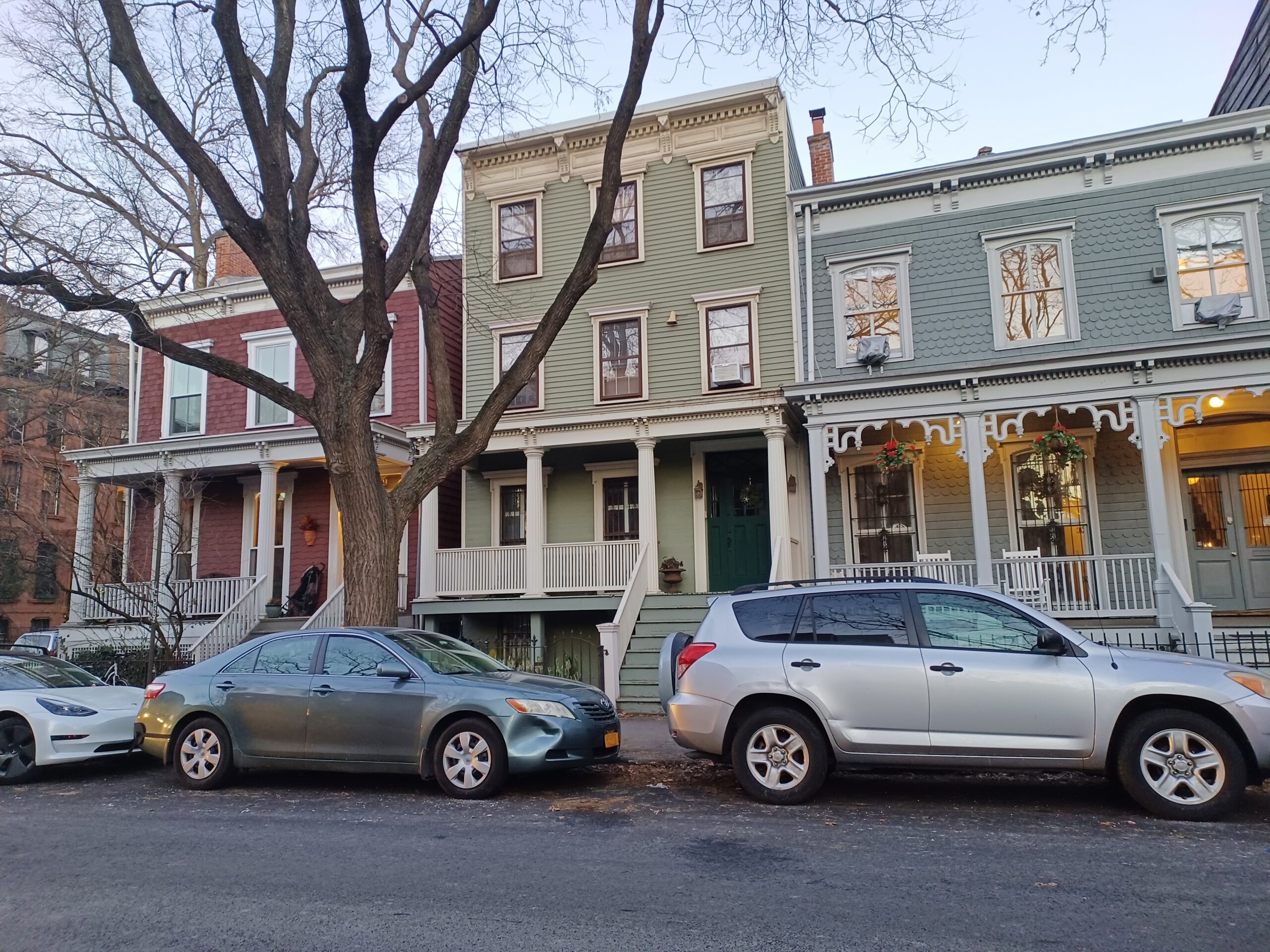
Carmella Charrington’s family bought the brownstone on Jefferson Avenue in Bedford-Stuyvesant 60 years ago. The mortgage was paid off long before this week. The property had passed through generations. Then, in 2024, county records showed it had been sold to an investment company called 227 Group LLC. Charrington says she never agreed to any sale. The dispute has wound through courts for more than two years, and on Wednesday it drew New York City Council Member Chi Ossé to her doorstep, where he was arrested while trying to prevent her eviction.
Her case is one of hundreds. From 2014 to 2023, officials recorded 1,500 complaints of deed theft in Brooklyn alone. Complaints to the New York Attorney General’s Office climbed nearly 300 percent between 2023 and 2025, according to Ossé. On April 24, 2026, Mayor Zohran Mamdani responded by establishing the city’s first Office of Deed Theft Prevention. He named Peter White, a longtime homeowner assistance attorney, as its director.
“Deed theft not only disproportionately robs Black and brown New Yorkers of their homes,” Mamdani said at a Brooklyn press conference. “It also robs them of the stability that a home provides.”
How Deed Theft Works
Deed theft happens when someone transfers ownership of a home without the real owner’s knowledge or consent. It is, at its core, property fraud. The New York State Attorney General’s Office identifies two main methods.
The first is outright forgery. A scammer forges the homeowner’s signature on a document called a quitclaim deed. A quitclaim deed is a legal form that transfers whatever ownership interest one party holds to another. The forged document gets filed with the county clerk’s office. On paper, the property now belongs to someone else. The second method is deception, where a homeowner is pressured into signing a document without understanding what it does. Seniors facing financial hardship are especially vulnerable here. A scammer presents paperwork as a loan modification or a temporary arrangement to prevent foreclosure. The homeowner signs. The deed transfers.
Once a fraudulent deed is recorded, the scammer can sell the property, borrow against its equity, or rent it out for profit, according to the FBI, which has issued national warnings about the rise of this crime. Most homeowners find out something is wrong only when a foreclosure notice arrives from a lender they have never heard of. By then, the damage is done.
Who Scammers Target
The New York State Attorney General’s Office identifies the homeowners most at risk as seniors, immigrants, and people of color. The common thread is equity. Scammers seek out homes that are mortgage-free or nearly paid off in neighborhoods where property values have climbed sharply.
In New York City, that description fits a specific geography. Bed-Stuy, Crown Heights, Harlem, and Southeast Queens are historically Black neighborhoods where longtime owners built equity across decades, often before those areas became desirable to outside investors. Those same homeowners now sit on some of the most valuable residential real estate in the country. The New York Legal Assistance Group, a nonprofit that provides free legal services to low-income New Yorkers, notes that scammers specifically target properties in gentrifying areas where even a below-market sale generates a fast return.
Nationally, the FBI’s Internet Crime Complaint Center recorded 9,359 complaints of real estate and rental fraud in 2024, with losses exceeding $173 million. Older homeowners are disproportionately affected.
Warning Signs to Watch For
Several red flags indicate a deed may have been tampered with. Property tax statements or utility bills stop arriving. A foreclosure notice comes from a lender the homeowner has never used. Online property records show a transfer the homeowner never authorized. Someone unknown appears at the property claiming ownership.
One warning deserves special attention. Anyone who presents documents and asks for a quick signature to protect a home or modify a loan should be treated with immediate suspicion. Legitimate lenders and government agencies do not pressure homeowners to sign under time constraints. According to the New York State Attorney General’s Office, any document related to property ownership should be reviewed by an independent attorney before signing. That attorney should never be someone recommended by a person who has a financial interest in the property.
Steps to Protect a Home Right Now
Three steps can significantly reduce the risk of deed theft.
First, check the property record. Most county clerk offices allow homeowners to search their address online for free and see whose name appears on the deed. Any unfamiliar name on that record requires immediate attention. Homeowners can start that search at their county clerk or register of deeds website.
The second is signing up for a property fraud alert. Many counties offer free notification services that send a text or email whenever a document is filed against a property. These alerts do not prevent a fraudulent filing, but they can dramatically shrink the window before a homeowner finds out. Search the county clerk website for the jurisdiction where the property is located to find the local alert program.
Third is estate planning. New York State recently passed a law allowing transfer-on-death deeds, which let a homeowner name who will inherit the property upon their death while keeping full control of it until that time. The New York State Attorney General’s Office identifies this as one of the most effective tools for closing the ownership gaps that scammers exploit when a homeowner dies or becomes incapacitated. Transfer-on-death deeds must be filed with the county clerk while the homeowner is alive. Free legal help with this process is available through the Homeowner Protection Program at 855-466-3456.
For homeowners already facing an eviction they believe stems from deed theft, New York State law allows a judge to pause eviction proceedings for 90 days, providing time to challenge ownership in the appropriate court.
Beyond New York
The conditions that enable deed theft exist wherever home values have risen faster than legal protections have kept pace. The FBI has documented cases in Ohio, Michigan, Arizona, and Massachusetts. The pattern is the same in every state: a paid-off home, an elderly or isolated owner, a forged document, and a county recorder’s office that processes filings without verifying the identity of the person submitting them.
Sources: New York State Attorney General’s Office, Federal Bureau of Investigation, New York City Mayor’s Office, New York Legal Assistance Group, New York City Council